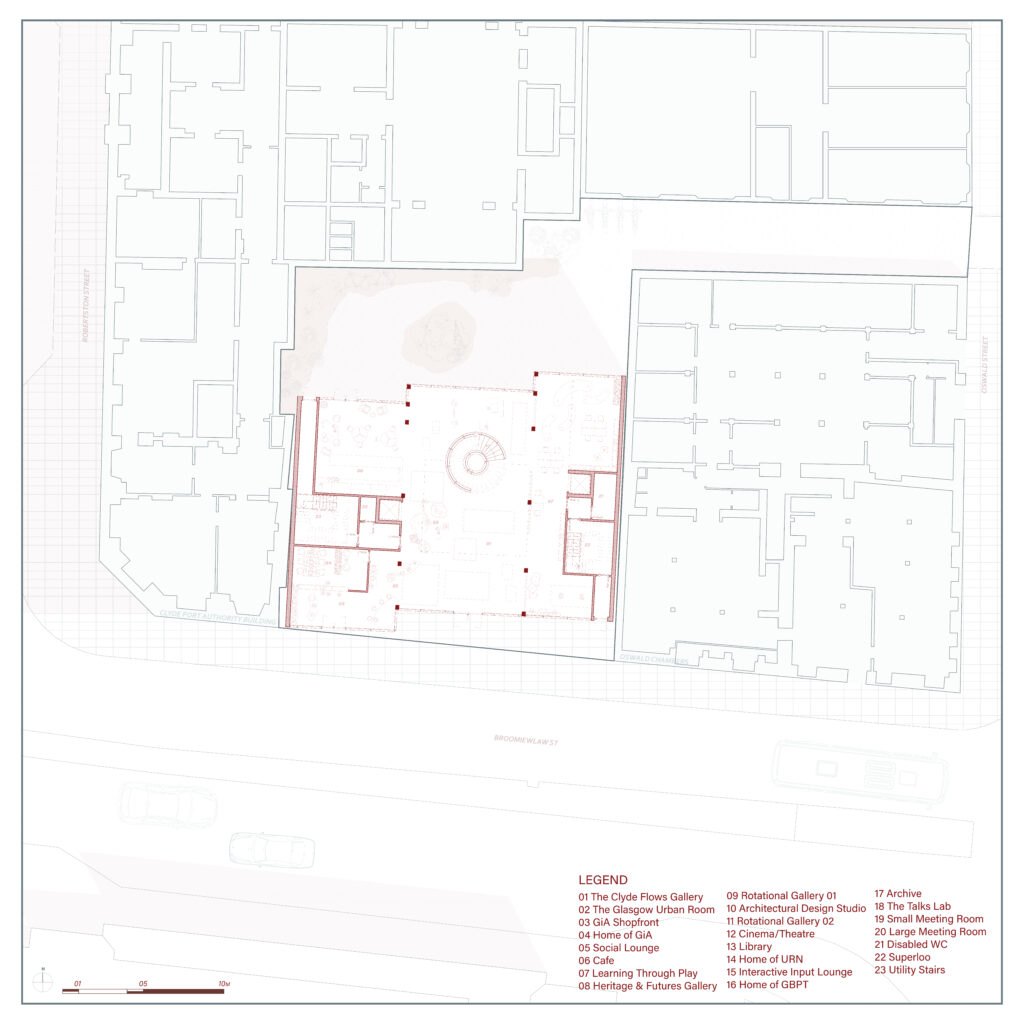
Conversations with the Clyde
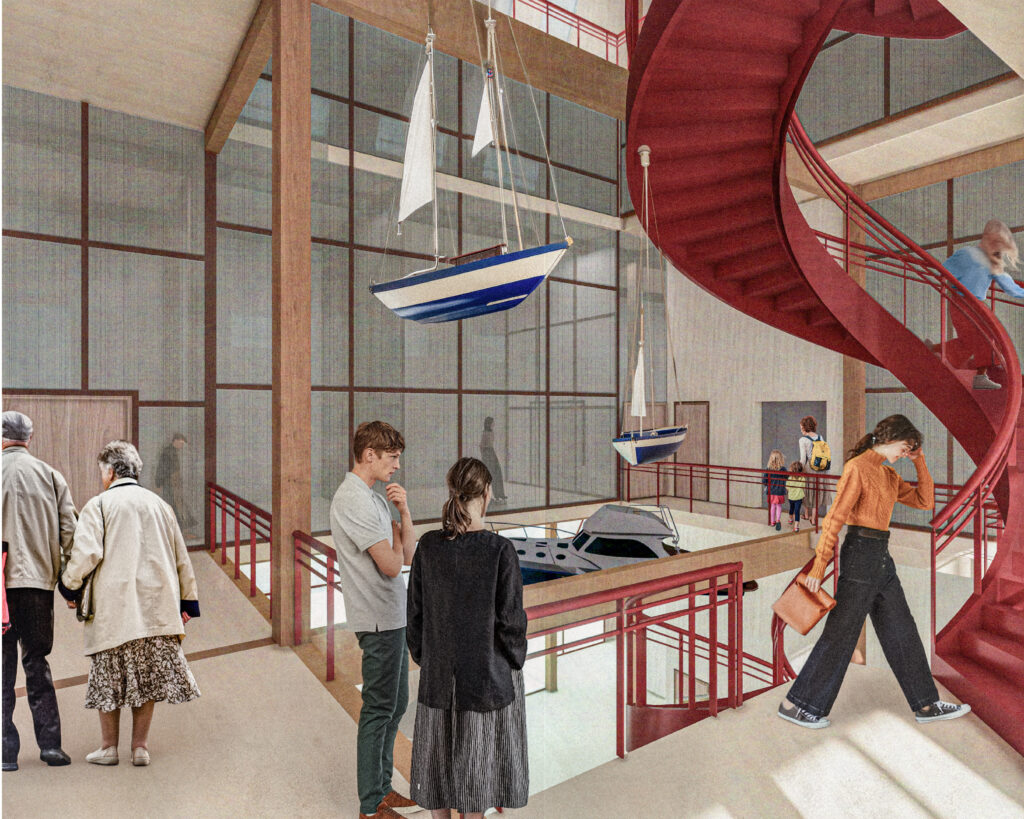
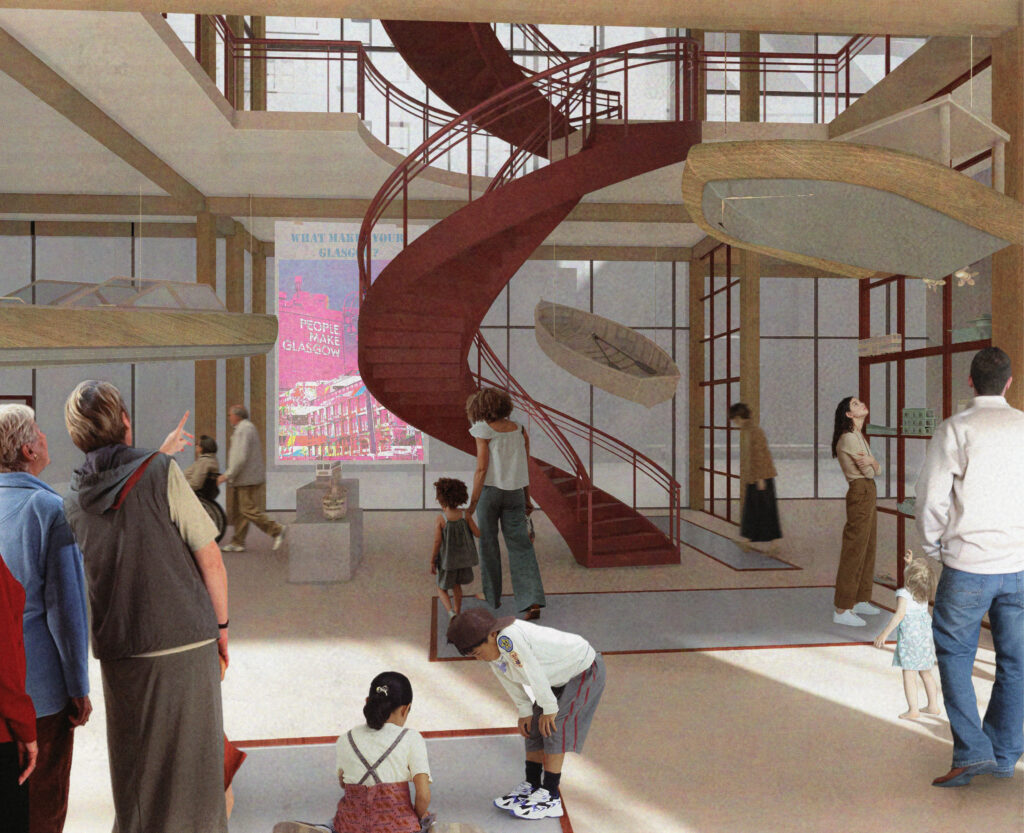
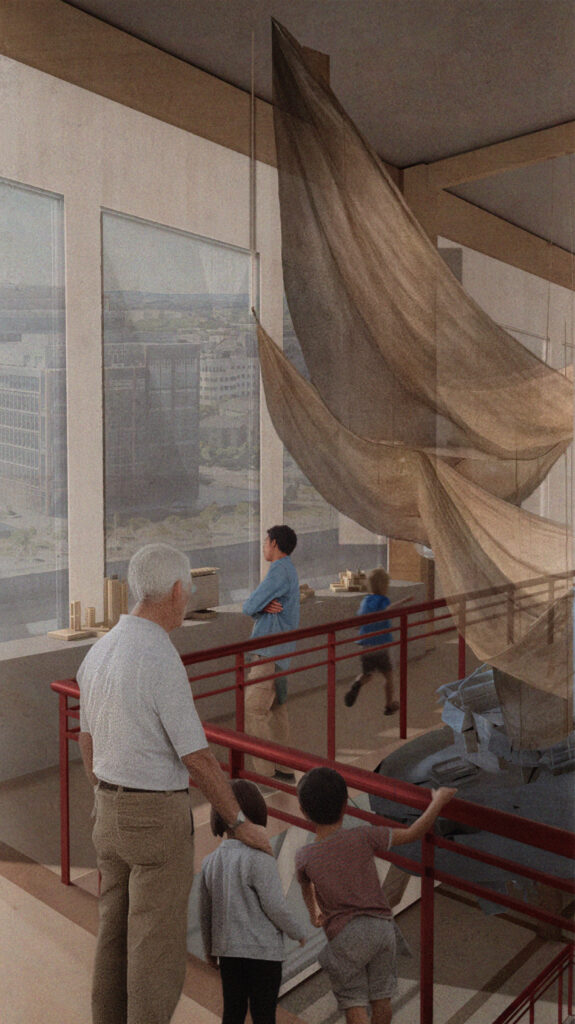
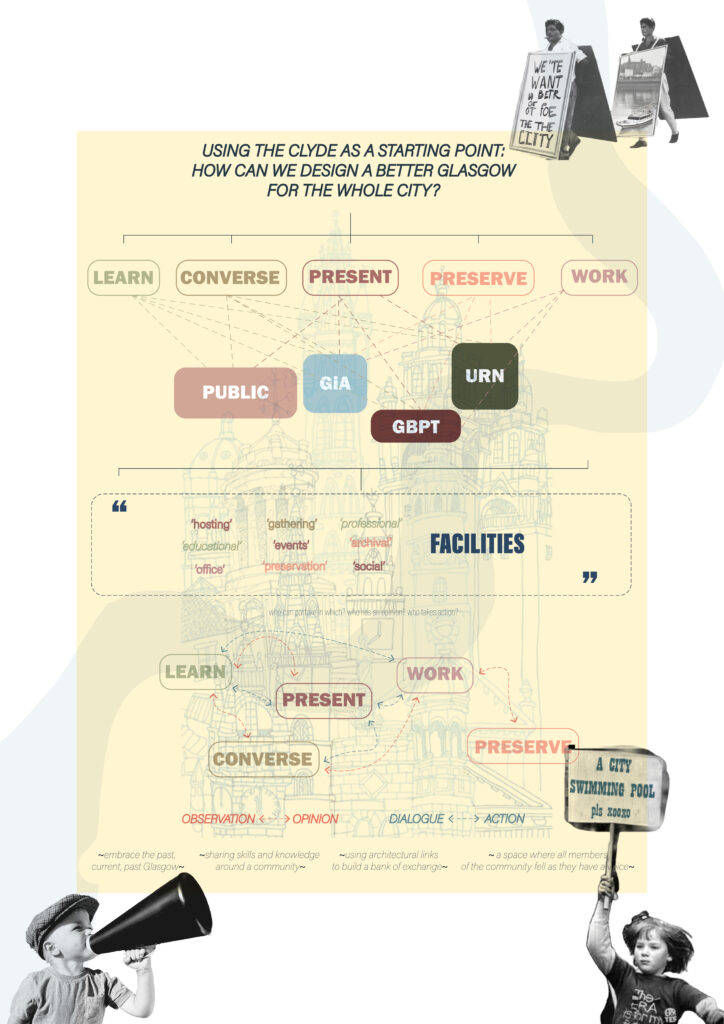
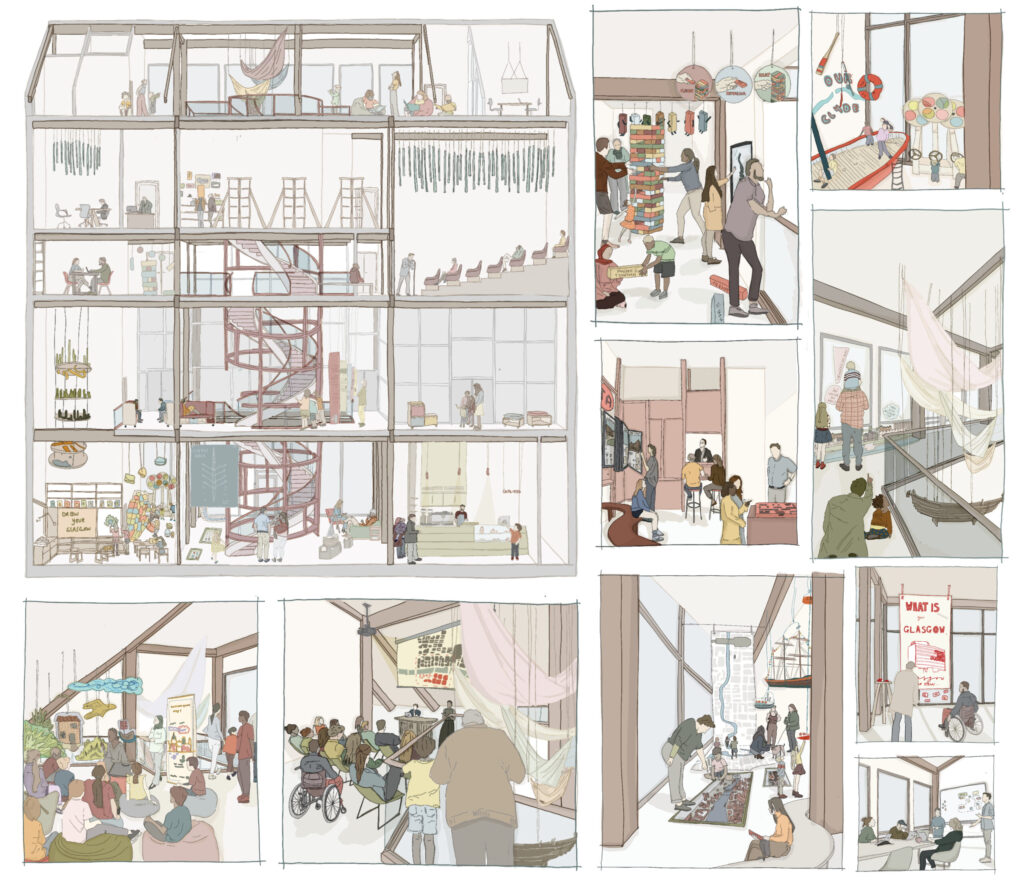
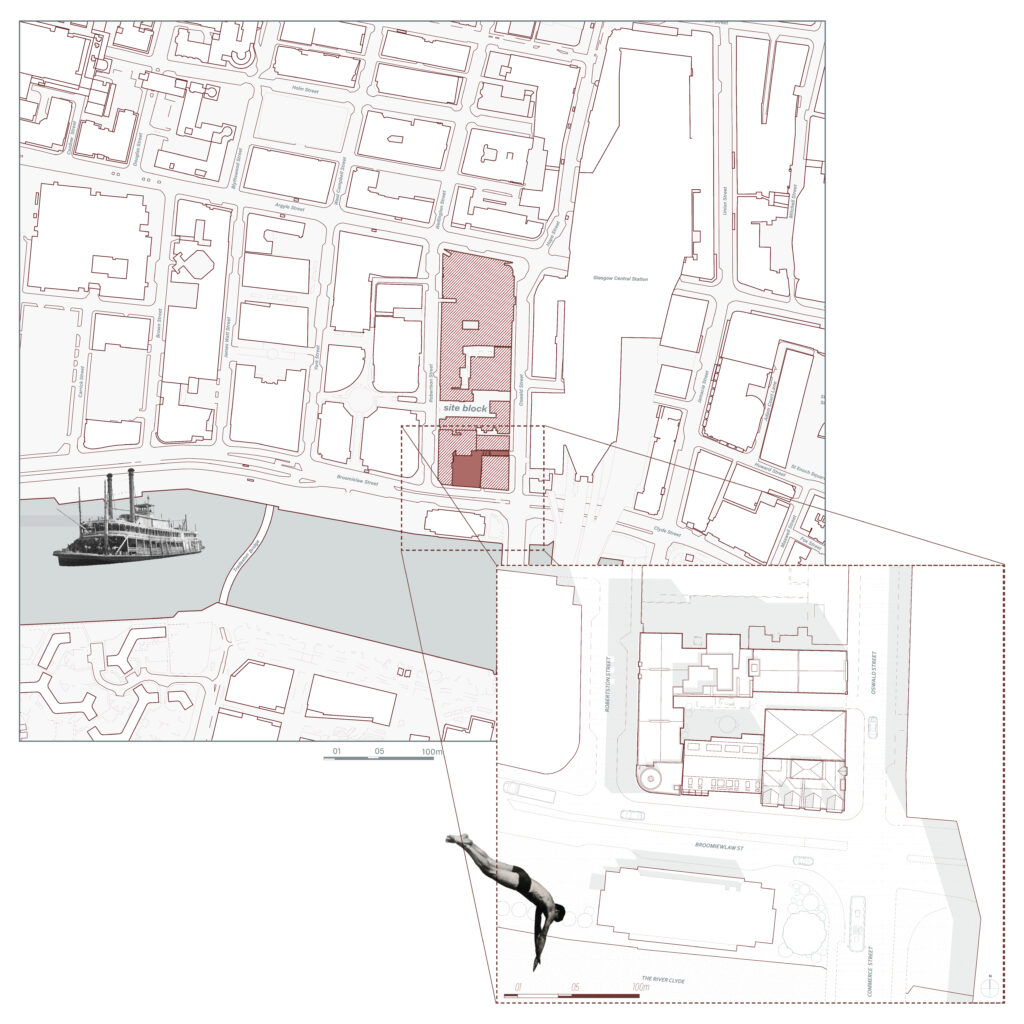
Conversations with the Clyde uses the river as an active programmatic driver rather than a passive backdrop, recognising its shared civic inheritance for residents of Glasgow. As an industrial, social, and civic constant, the river provides an accessible point of entry to conversations around the building and cities’ future, positioning the architecture as a mediator between past and present. The project responds directly to the brief by engaging the public as an additional client, enabling a broader range of voices beyond those traditionally within the built environment.
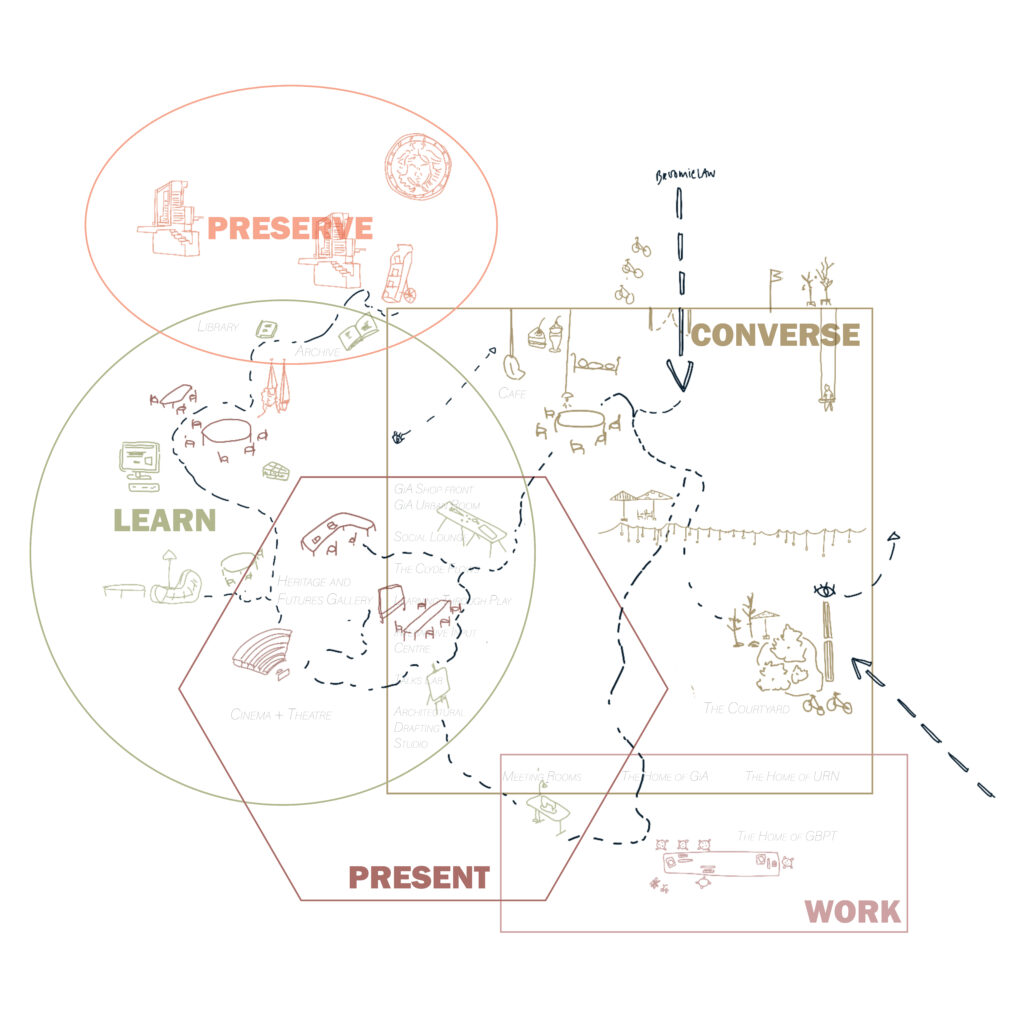
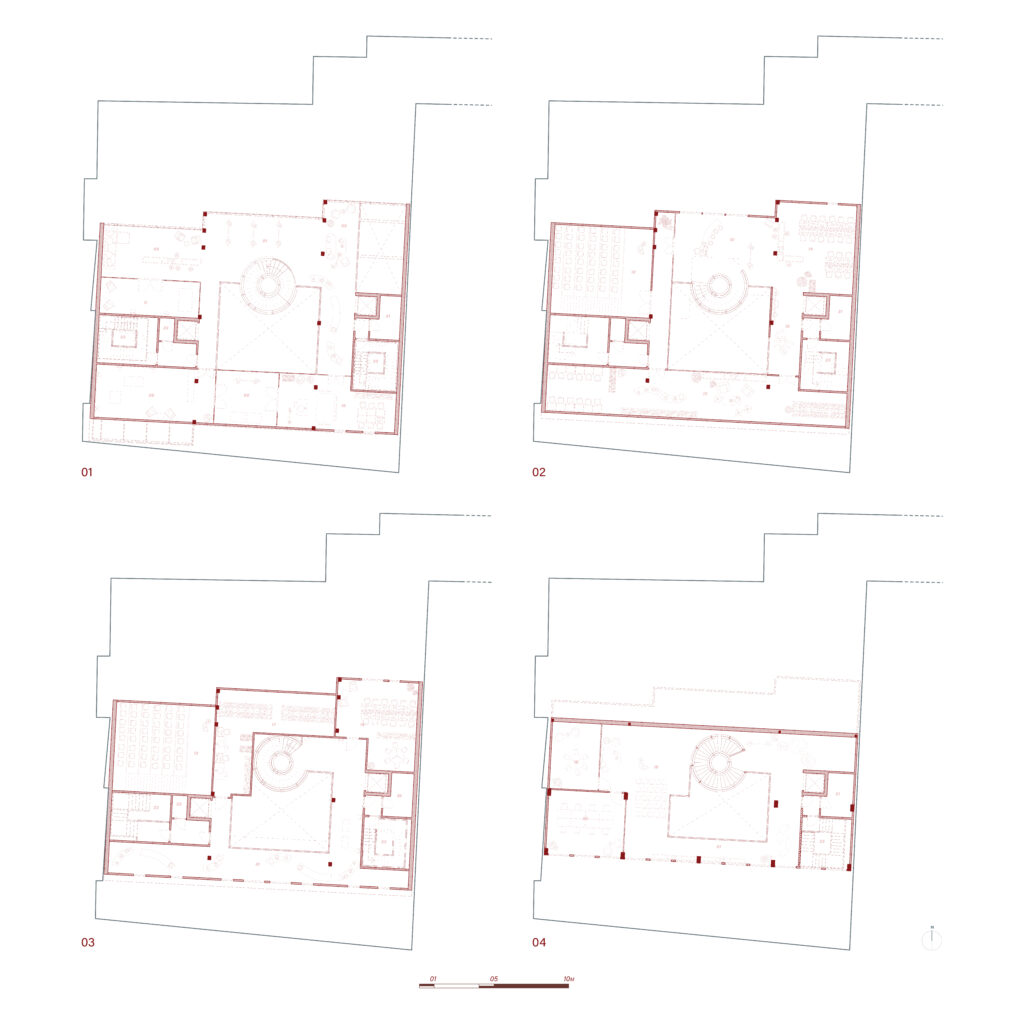
Key implementable strategies underpin all design decisions, including interlinked spatial systems, layered organisational strata, and The Clyde Flows as the central civic anchor for activity and participation. Permeability operates as a core principle, ensuring openness, legibility, and continuous activation. Programme is structured through five categories: converse, present, learn, preserve, and work, forming a civic sequence that guides users from “Observation to Opinion”, and from “Dialogue to Action”.
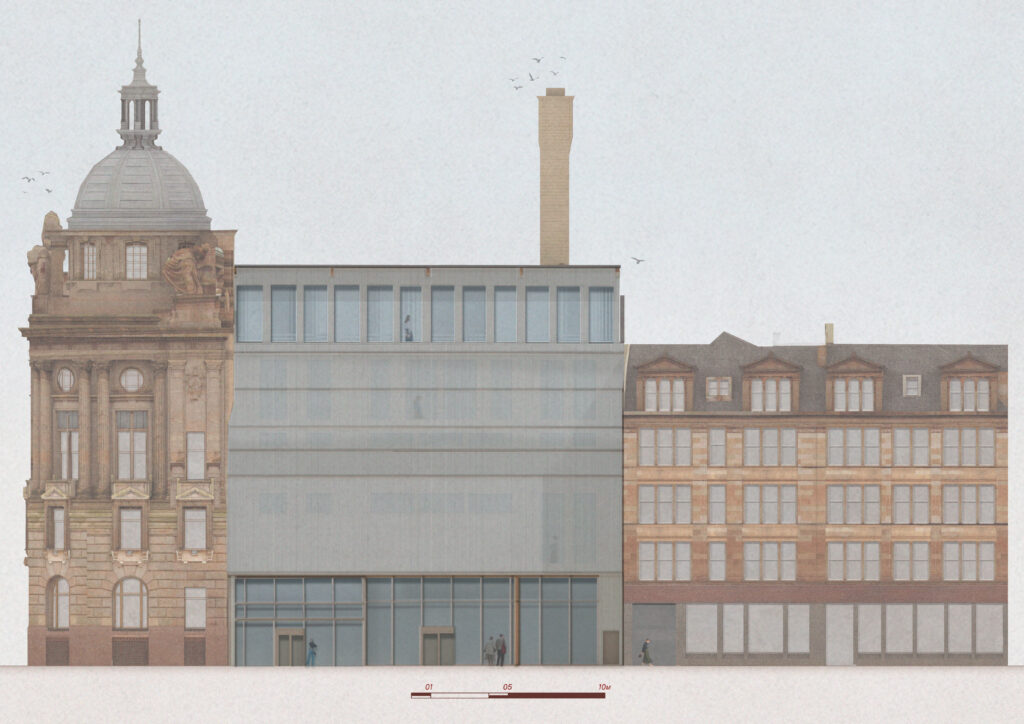
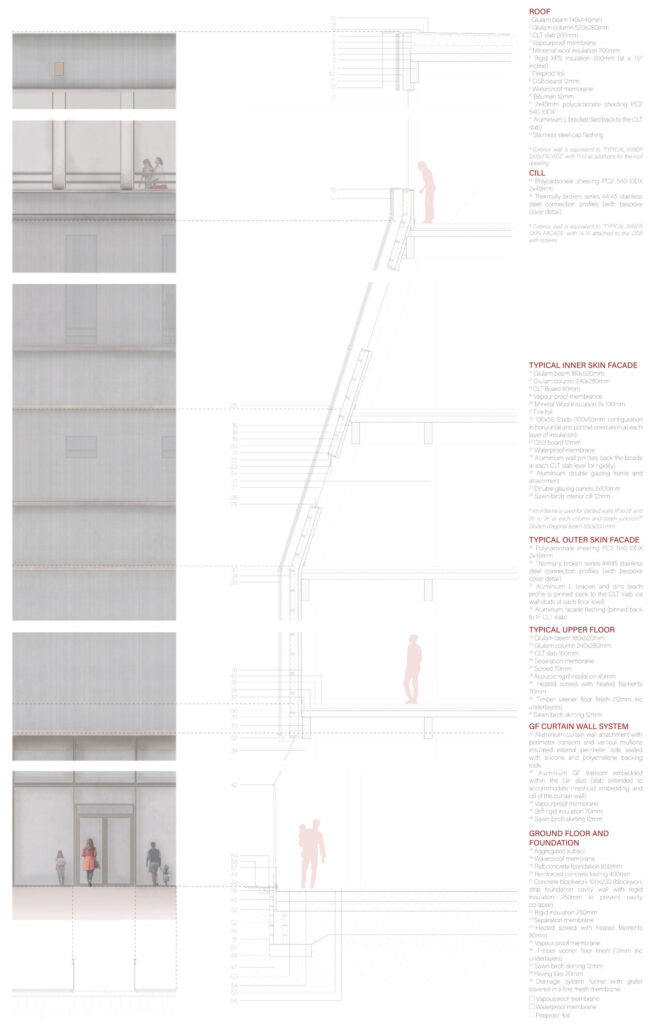
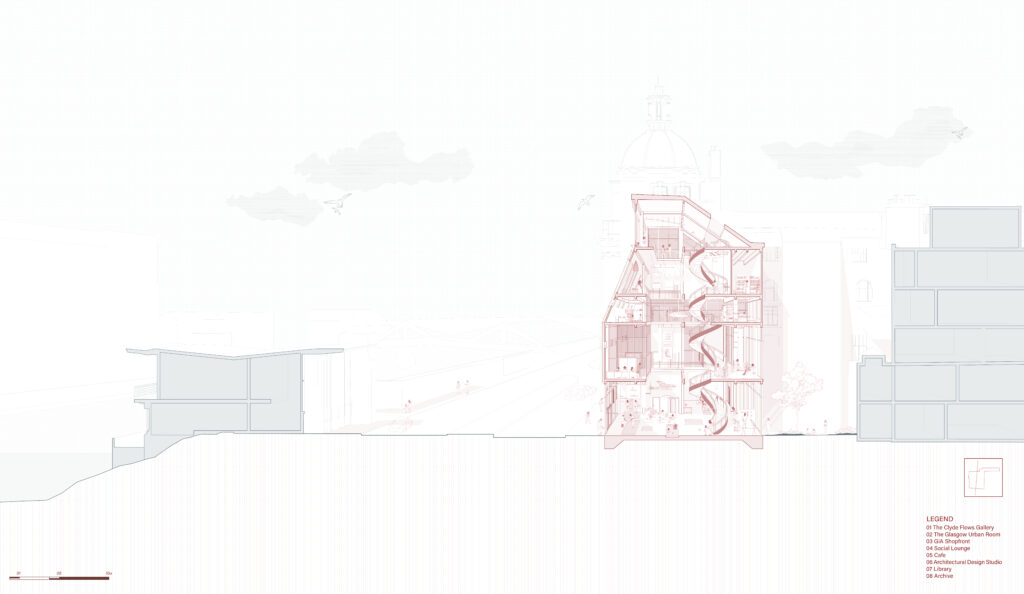
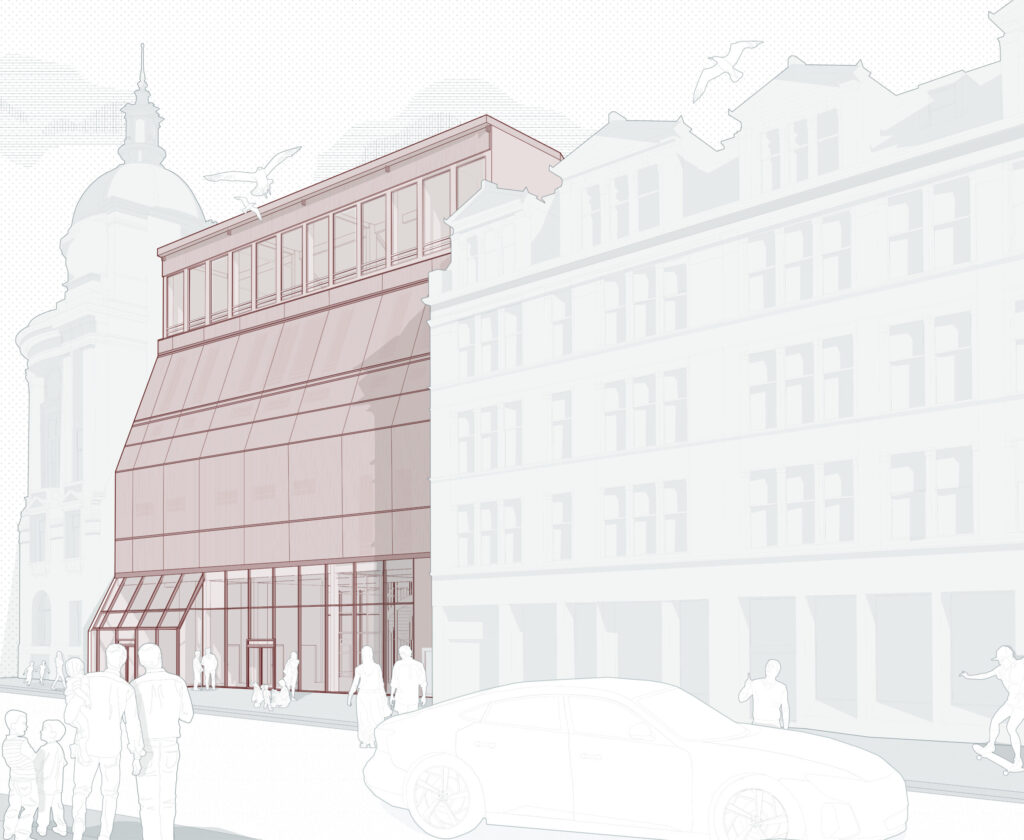
The Clyde Flows gallery functions as both circulation and a civic vein, structuring movement and hierarchy between specialised and private client spaces. Material legibility, driven by a continuous polycarbonate language, reinforces transparency and spatial clarity. A double-skin façade establishes a luminous threshold, revealing internal activity while maintaining contextual sensitivity within Broomielaw’s urban grain.
Overall, the proposal establishes a legible and permeable civic building that encourages public access, translating observation into opinion and dialogue into action, shaping a more inclusive future for Glasgow.