
Matter Labs
From our collaborative project Creating Future Worlds, exhibited at the Advanced Research Centre in Glasgow, our group employed an iterative, research-led approach to develop this design proposal in response to the theme of Planetary Health: Civic. To contextualise the project, we developed a future narrative grounded in current trajectories and plausible environmental and socio-political shifts.
In 2035, the climate crisis reached a critical tipping point, triggering widespread global restructuring and the strict enforcement of the Polluter Pays Principle. This shift led to a dramatic reduction in material extraction, petrochemical manufacturing, and exploitative labour practices, compelling industries to account for the environmental and social costs embedded within global production systems.
As these systemic changes unfolded, society began to confront the toxic material cultures that had long underpinned consumerism and industrial growth. Efforts toward ecological repair became inseparable from broader attempts to restore relationships with land, reconfigure material circulation, and reshape collective attitudes toward consumption and responsibility.
However, despite these transformations, harmful substances remain embedded in everyday life, from synthetic fibres shedding microplastics to toxic dyes and chemical residues persisting within products and environments. This raises a central question: how can society address the long-term legacy of contamination already woven into modern material culture?
In response, the team behind MatterLabs™ emerged to confront the consequences of historic manufacturing practices through a series of remediation technologies and treatment processes. Their work enables society to continue using existing materials and products while actively reducing their environmental and biological harm.
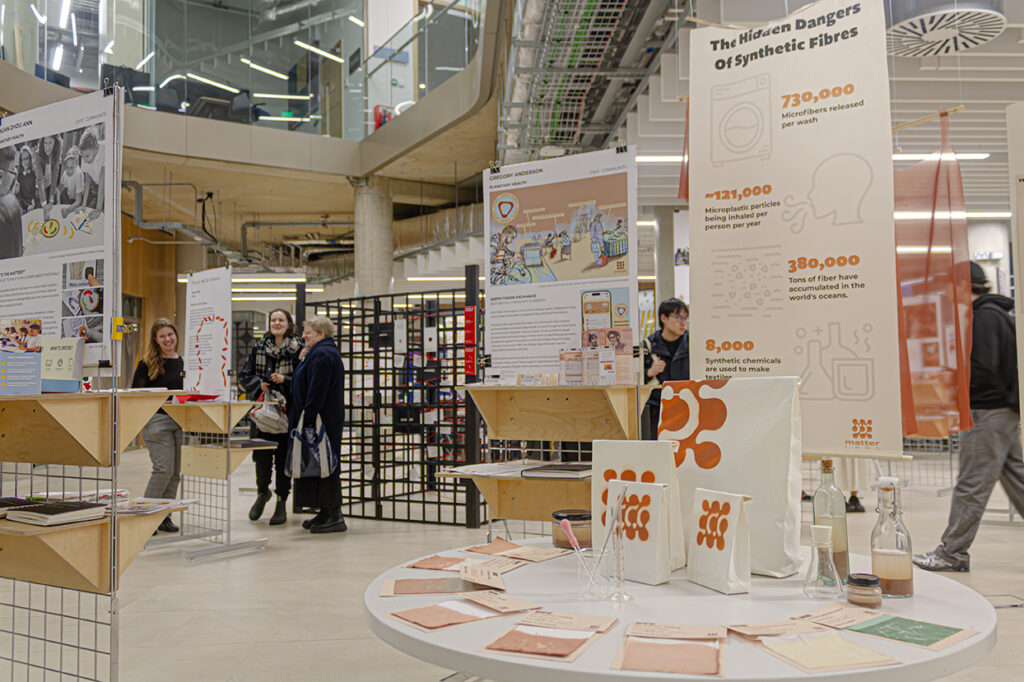
Display of Matter Labs Products After Treatment
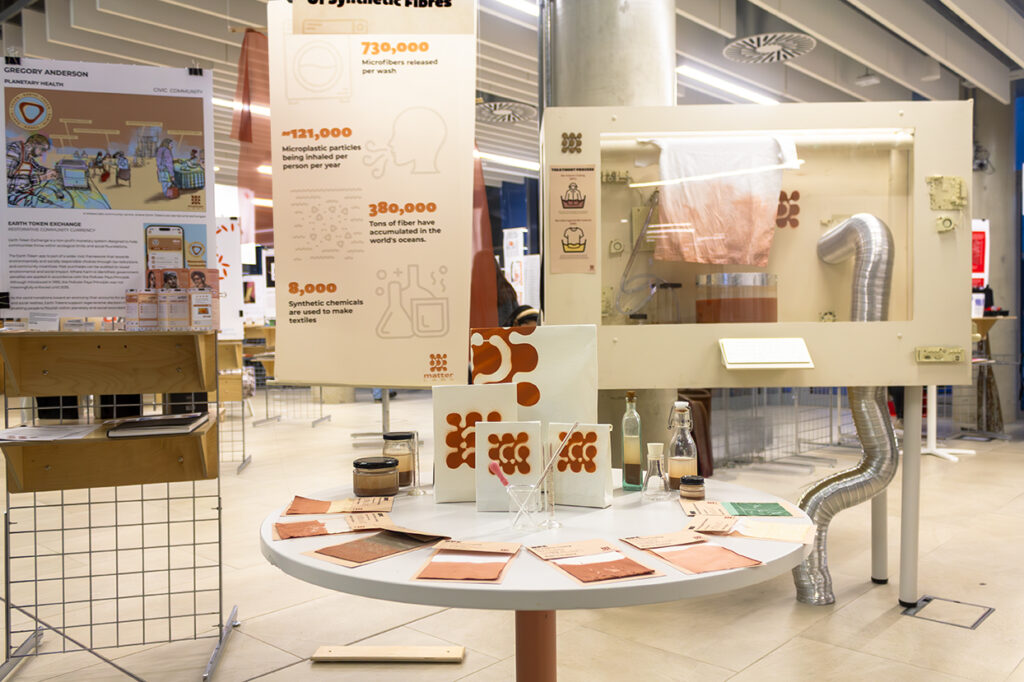
Display of Matter Labs Treatment Facility and Samples
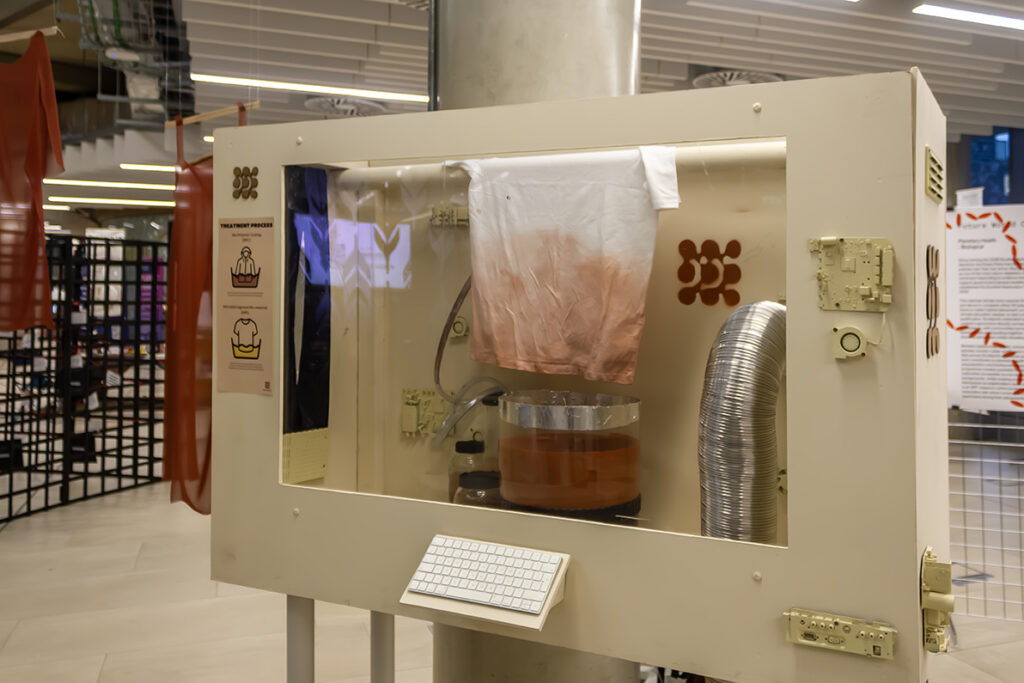
A polyester T-shirt is undergoing neutralisation at a Matter Labs facility, where protective coatings are applied to suppress microplastic shedding and chemical emissions.