Chapter One: Investigate
THE EXISTING:
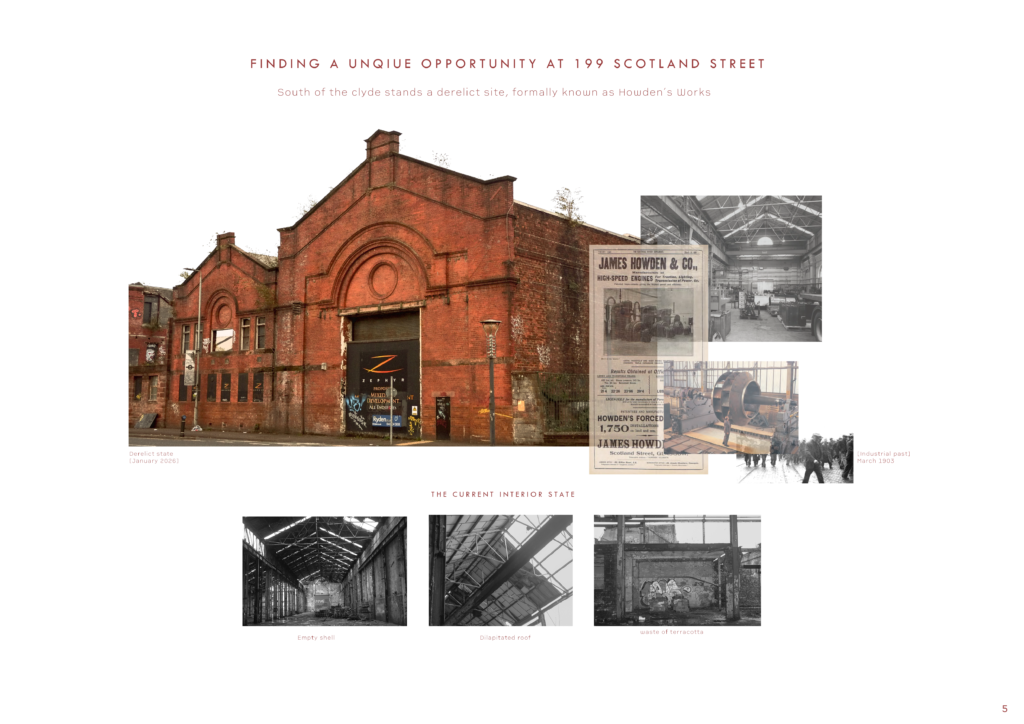
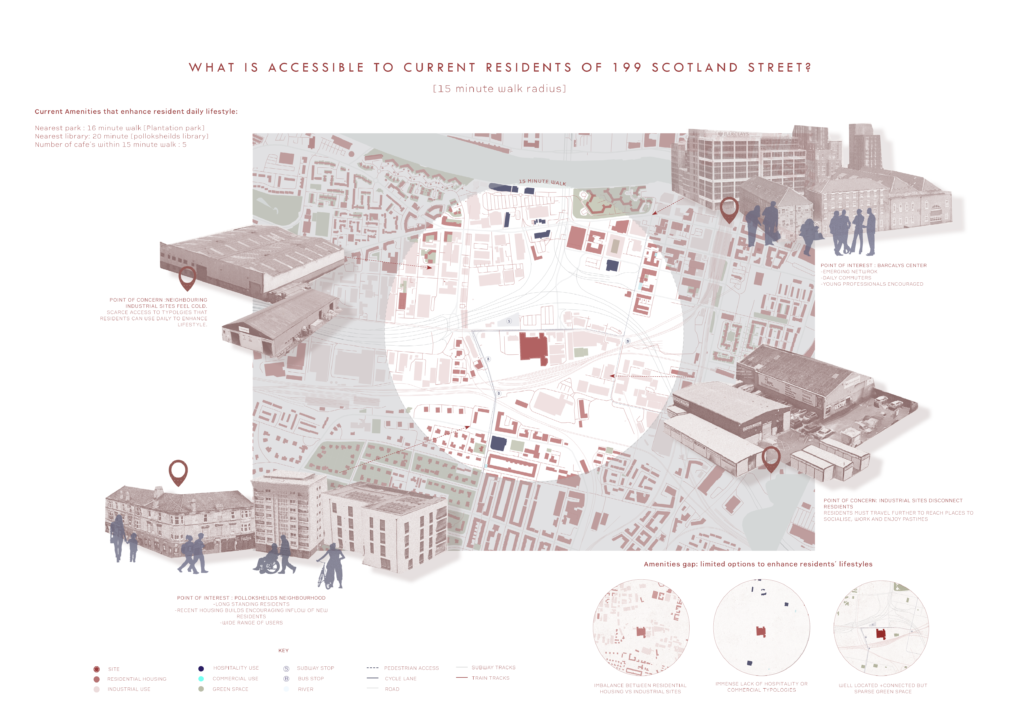
Howden’s Crossing began from the former factory site “Howden’s Works” at 199 Scotland Street, which has stood empty for over 25 years, contributing to a sense of fragmentation and disconnection within the surrounding community.
While there have been proposals for housing, there is concern that a standard development could feel sterile and fail to improve residents’ daily lives. Howden’s Crossings proposes an alternative approach: to create a place for everyday use—separate from the home—where people can enjoy simple pleasures such as passing encounters, socialising, working, and wandering.
PROJECT PLAN:
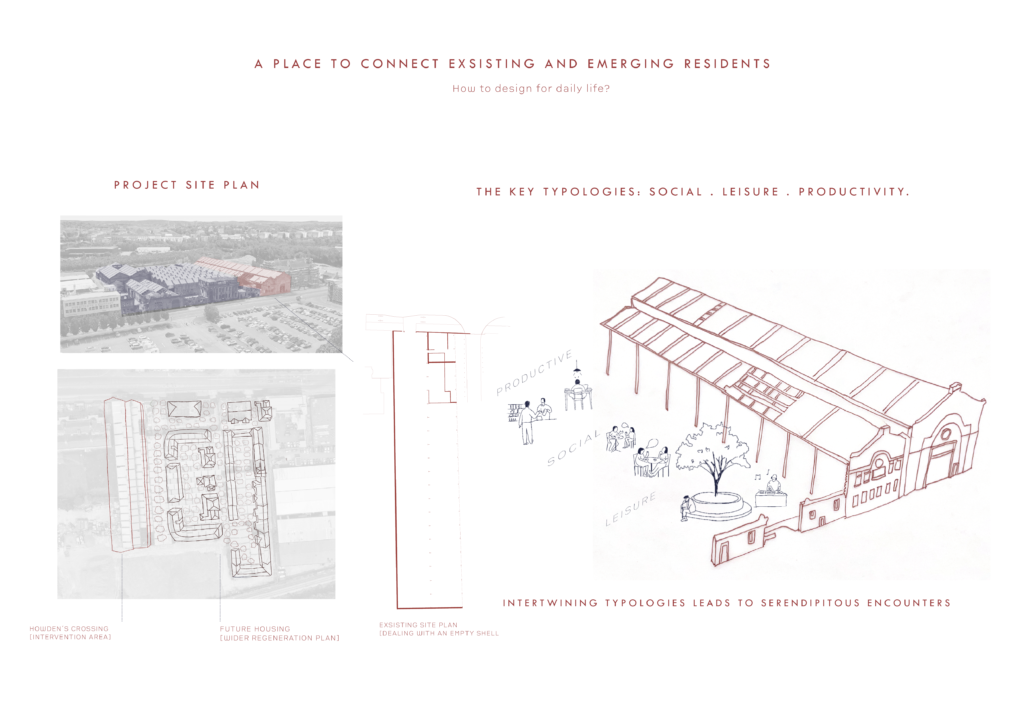
Howden’s Crossing hopes to revitalise this derelict site. A section of the site is chosen for renovation, whilst the rest is to be imagined for housing conversion. Situated on the boundary of existing and emerging resident. Howden’s Crossing will tie the fragmented neighbourhood together.
THE KEY TYPOLOGIES OF HOWDEN’S CROSSING:
SOCIAL . LEISURE . PRODUCTIVITY.
Social spaces bring people together to meet, watch, and connect, shaping culture as it happens. A mix of uses builds trust and a sense of belonging through everyday activity.
Leisure spaces offer a pause, somewhere to rest, breathe, and reflect, which matters even more in industrial areas with little green space. They make room for sport, play, and shared events throughout the year.
Productive spaces weave work into daily life, supporting learning, making, and local trade. They create opportunities to share skills, exchange ideas, and connect through doing.
INTERTWINING TYPOLOGIES LEADS TO SERENDIPITOUS ENCOUNTERS
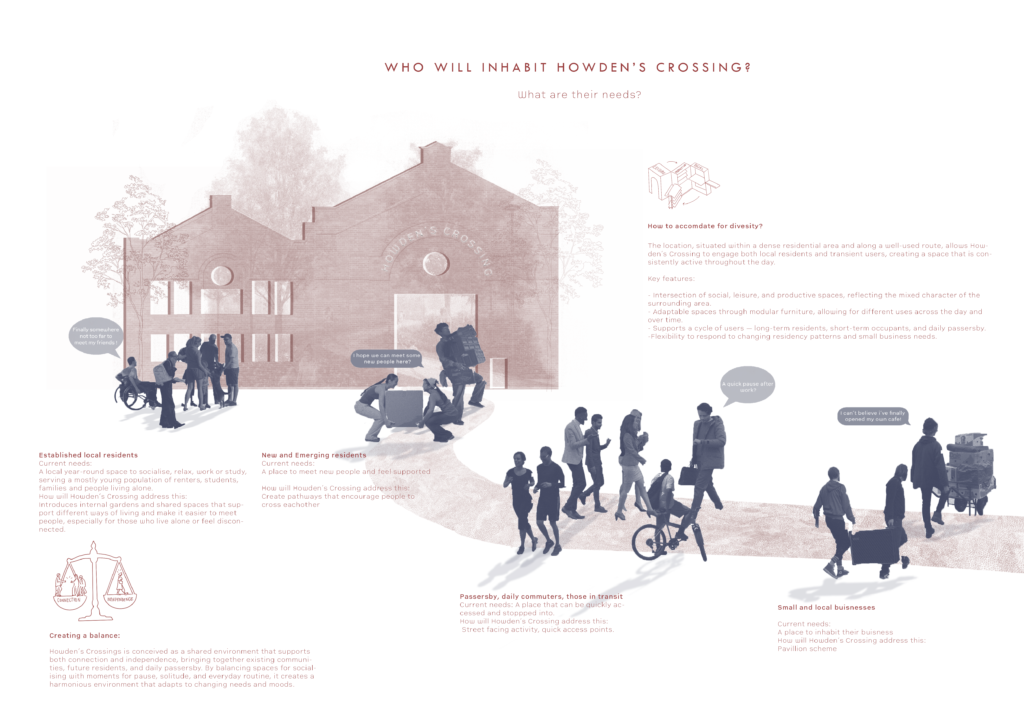
As people move through different routines, coming for work, staying for leisure, passing through social spaces, they begin to overlap in ways that aren’t planned. The same paths are shared at different times, and familiar faces appear in unfamiliar contexts. Over time, repetition builds recognition, and recognition turns into interaction.
Because a range of uses sit side by side, people are also exposed to things they weren’t looking for, a conversation, an activity, a skill, a group of people. These chance moments come from simply being in the same place for different reasons, allowing everyday routines to open up unexpected connections and discoveries.