Series W
Series W began from a frustration with the way sustainability is often framed within large corporations: appearing responsible, but rarely challenging the culture of consumption and product replacement that it incentivises.
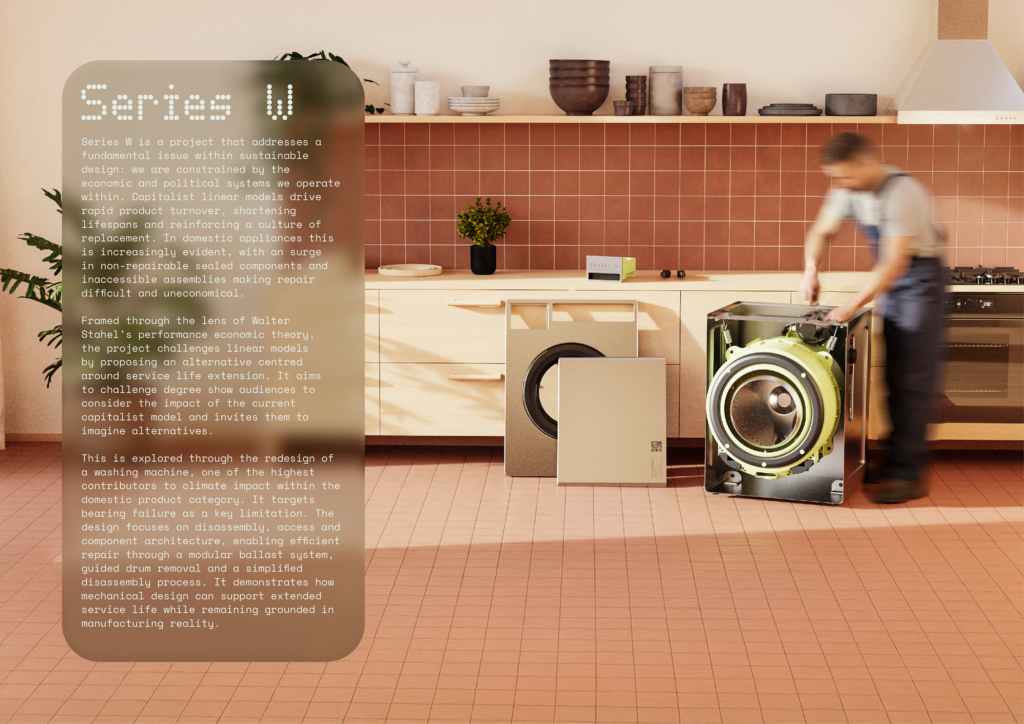
Framed through Walter R. Stahel’s performance economy, the project challenges linear models of ownership and proposes an alternative centred on service-life extension, asking what products might become if there was a systemic change in how we value them.
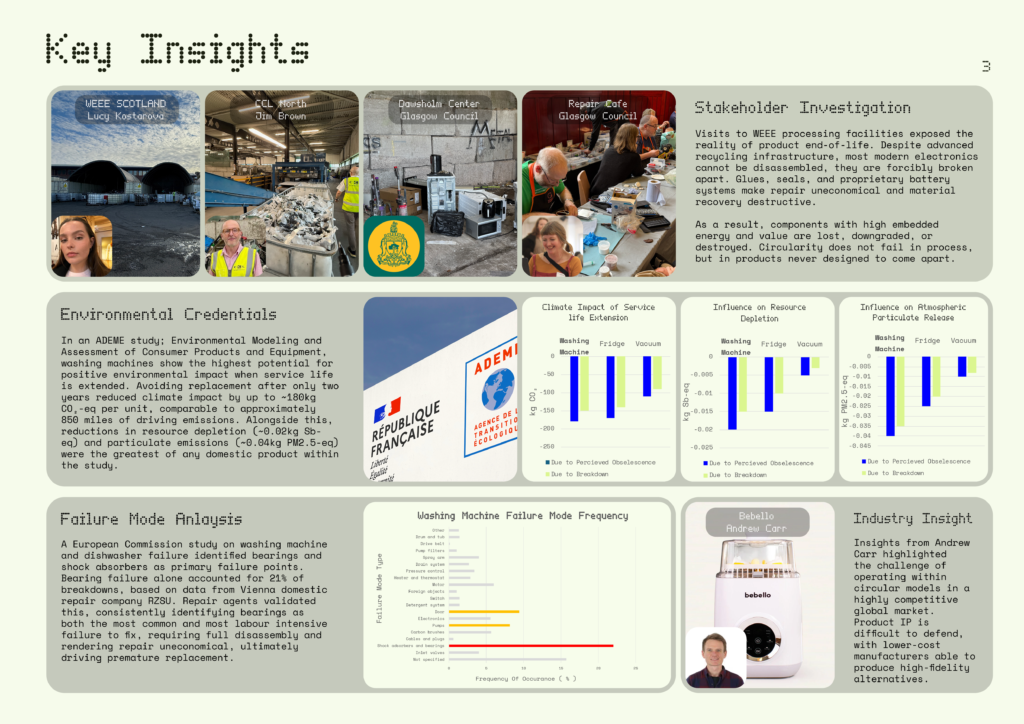
Through visits to council waste sites, material recovery and WEEE processing facilities, and Repair Café Glasgow, I became more aware of the realities of end-of-life processing, and the need to preserve product value before reaching that point. Speaking with circular business leaders also helped me understand the commercial challenges of operating circular models within our economy.
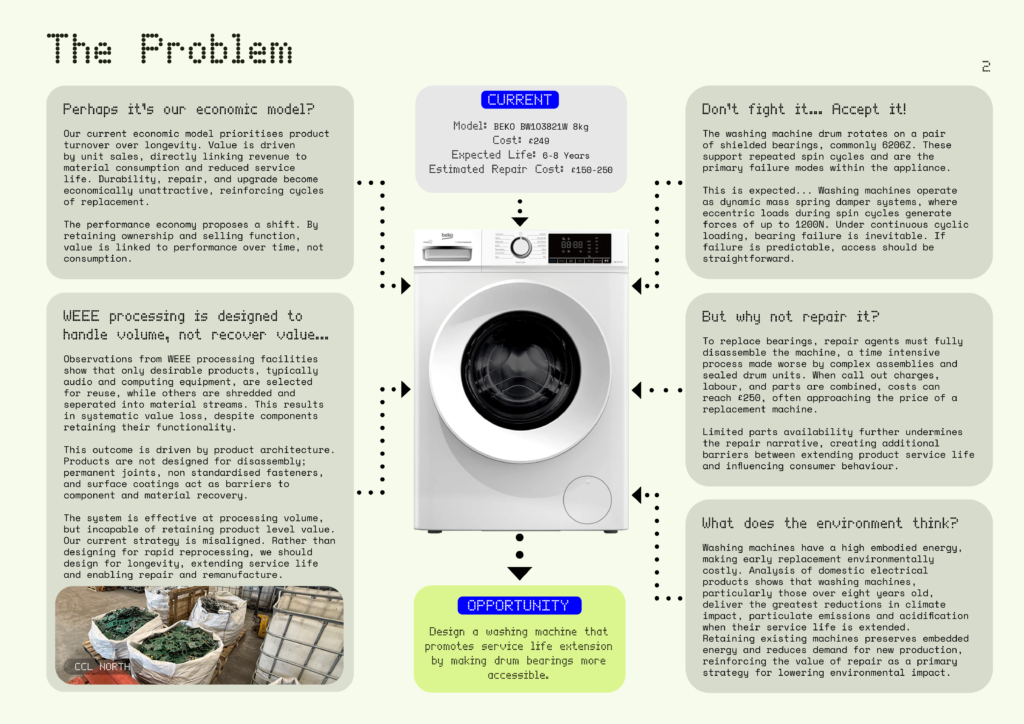
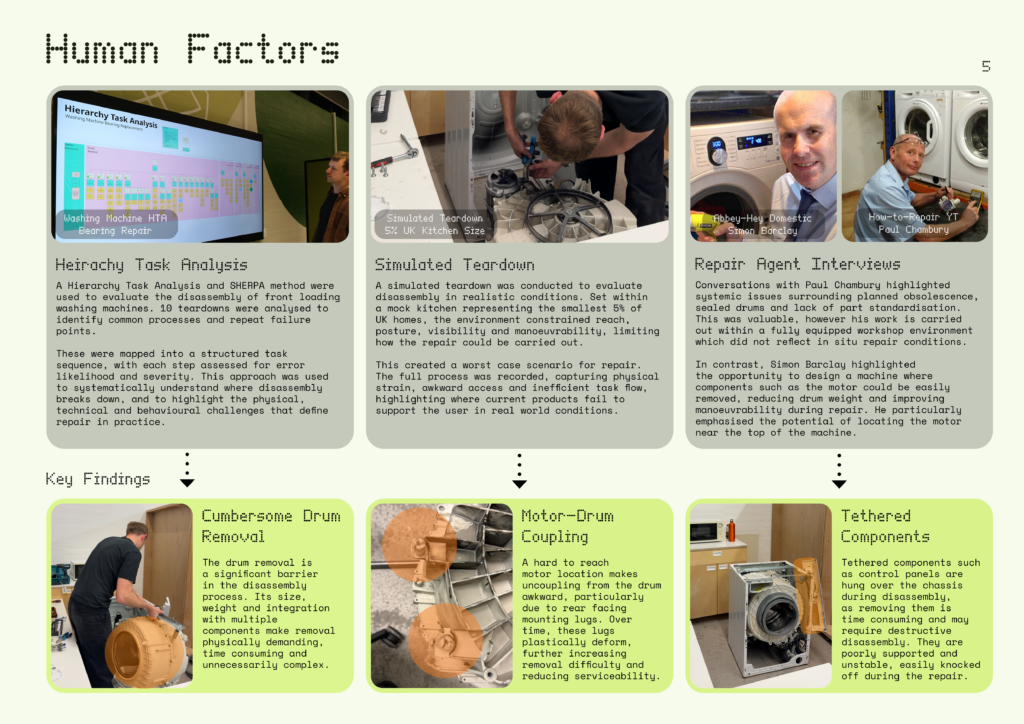
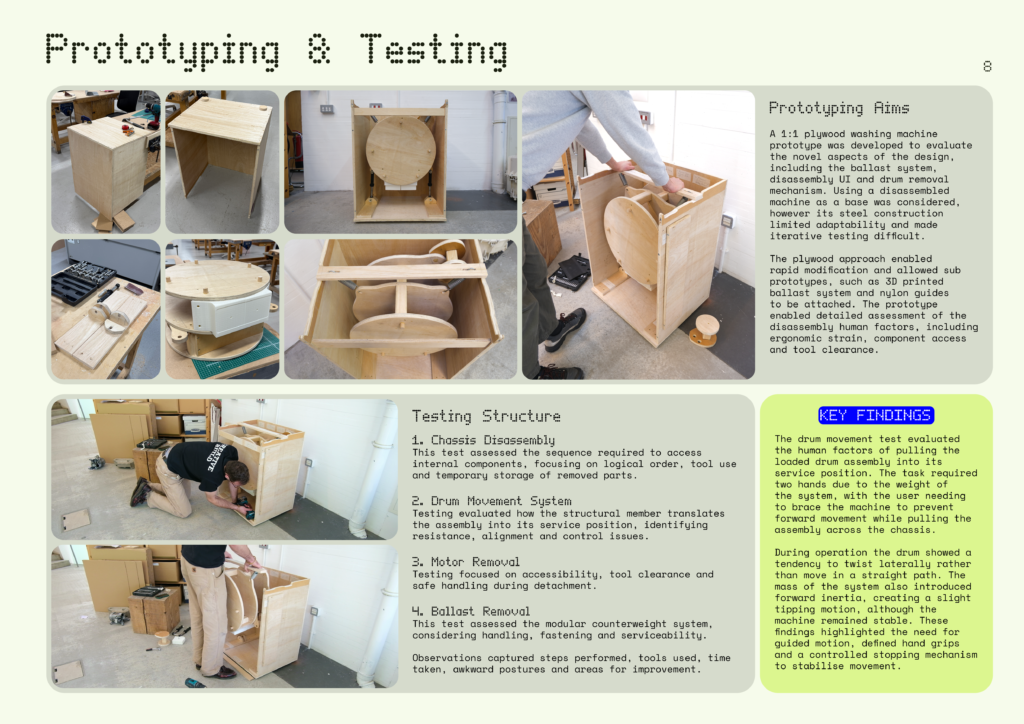
Combined with research from ADEME identified washing machines as the strongest opportunity for service-life extension within the domestic product category. From there, failure mode analysis narrowed the project to bearing failure: the primary failure mode, and one that presents the greatest repair challenge. Conversations with repair agents and human factors simulation then highlighted the realities of in-situ repair, where access, labour time, sealed assemblies and awkward working conditions often make repair lengthy and uneconomical.
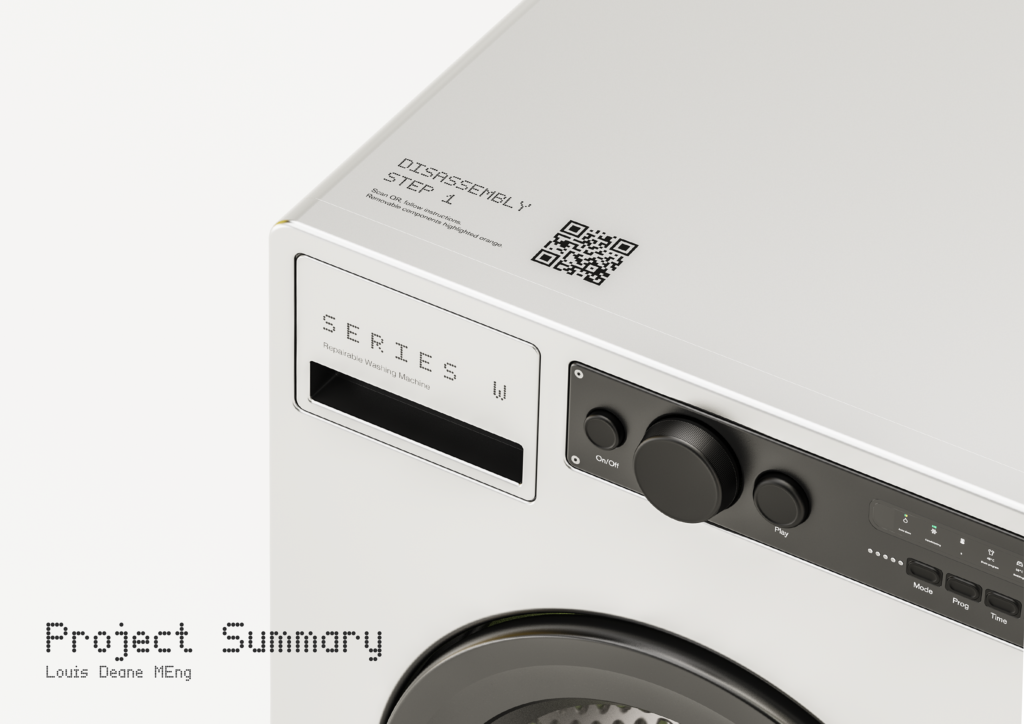
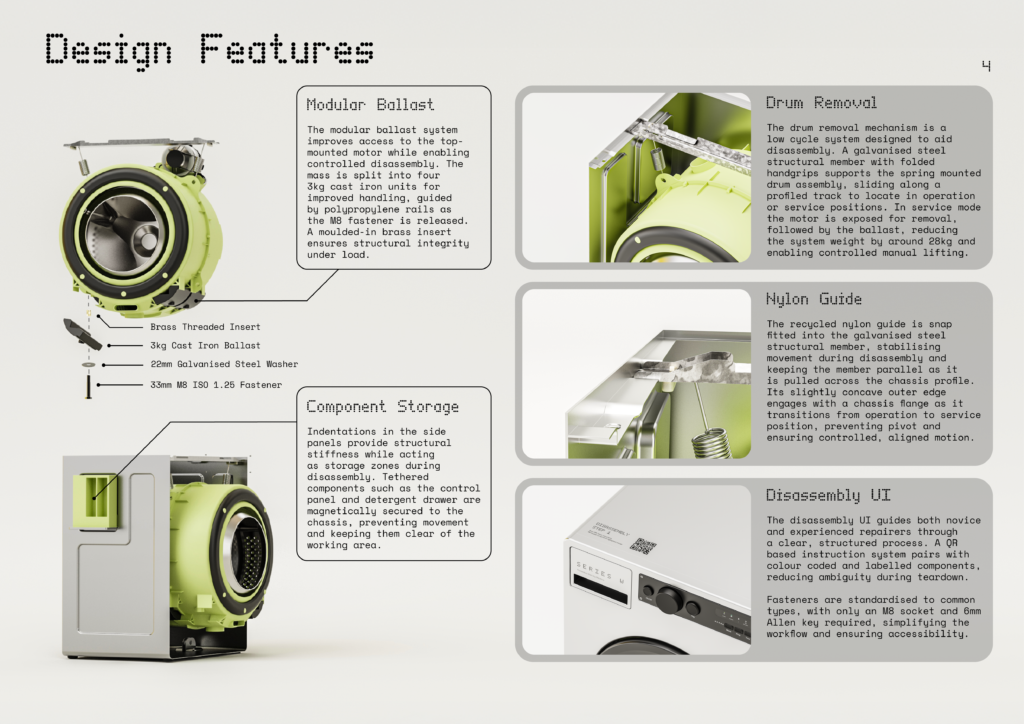
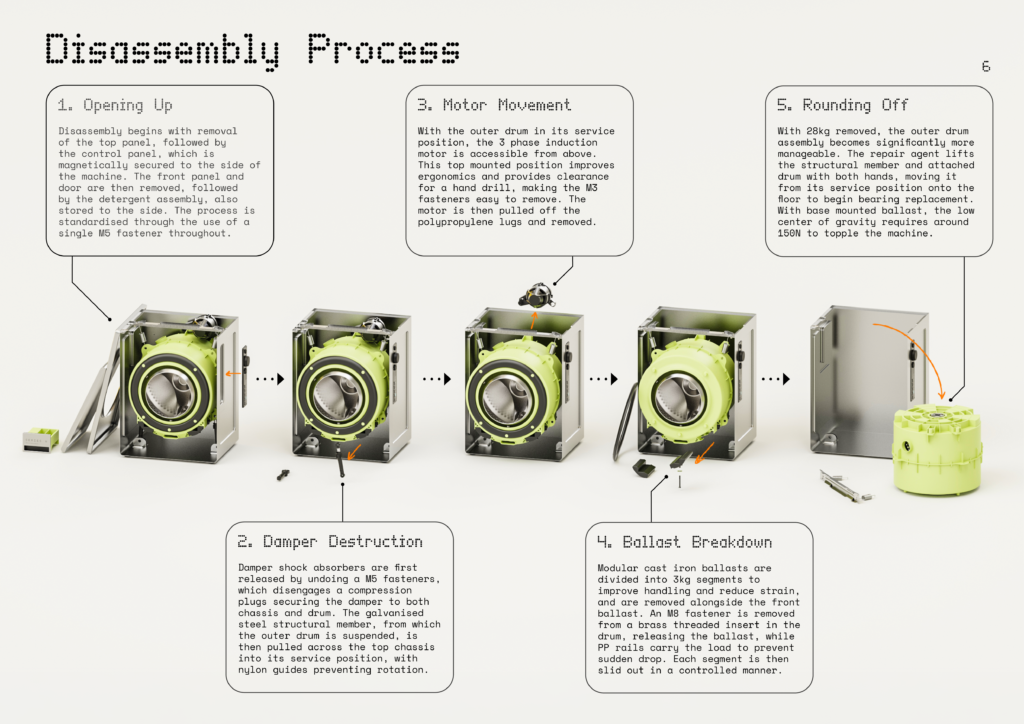
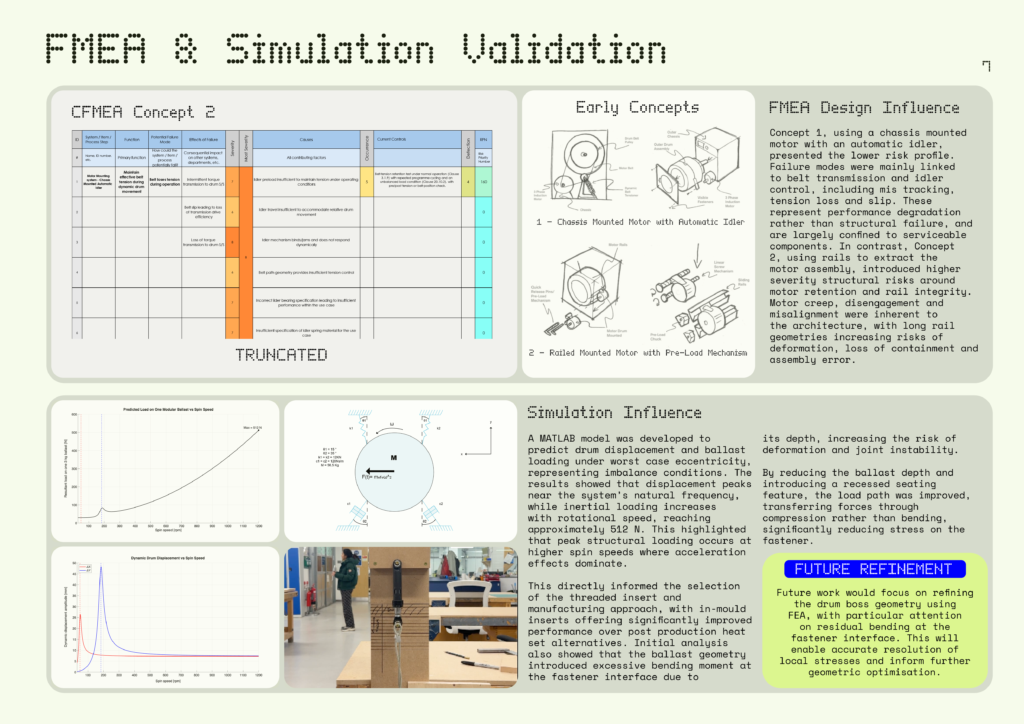
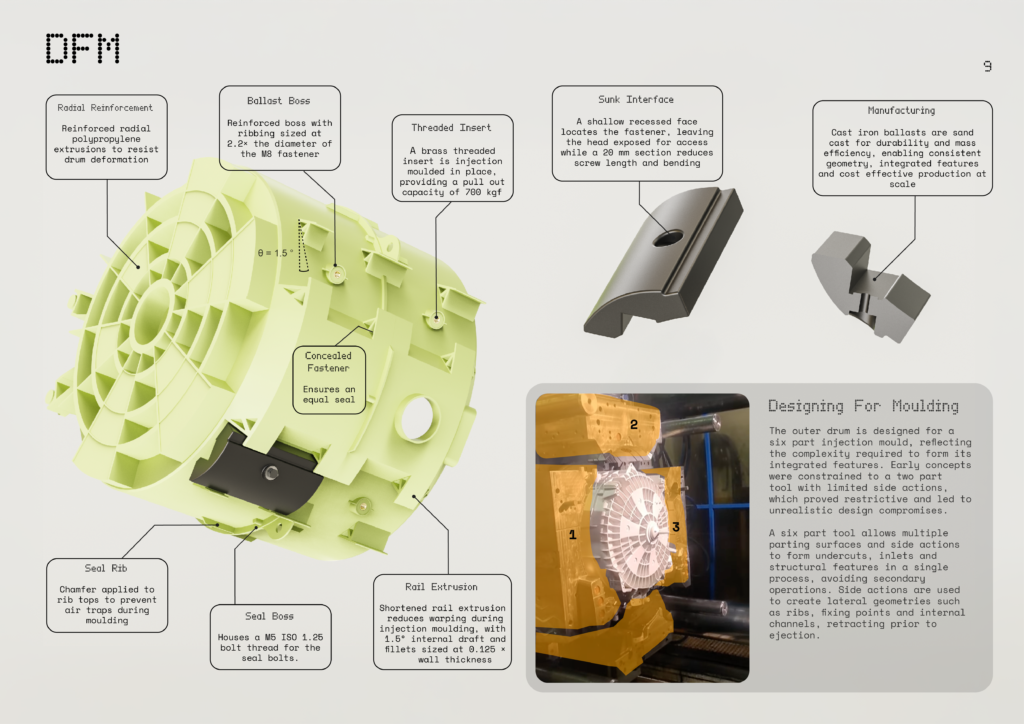
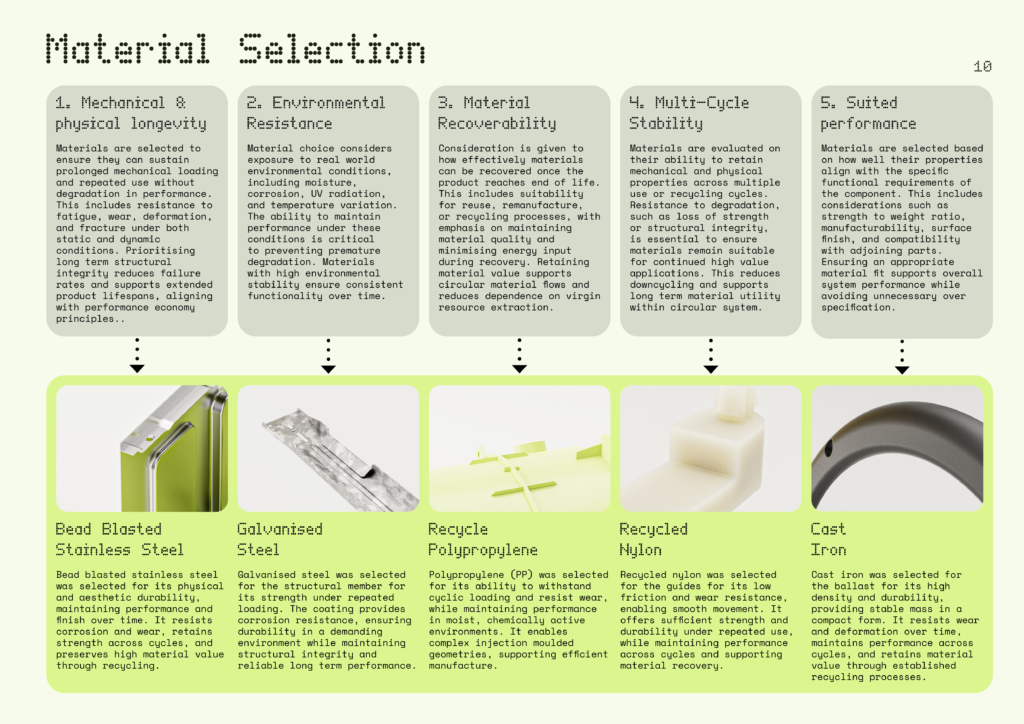
Series W responds with a controlled, guided sliding drum access system, top-access motor, modular counterweight system, chassis component storage, standardised fasteners and a disassembly UI, validated through FMEA, dynamic modelling and full-scale prototyping.