The Highland Lantern
Using light, form and spatial arrangement to establish a threshold that encourages community life and celebrates harmony between structure and fire safety.
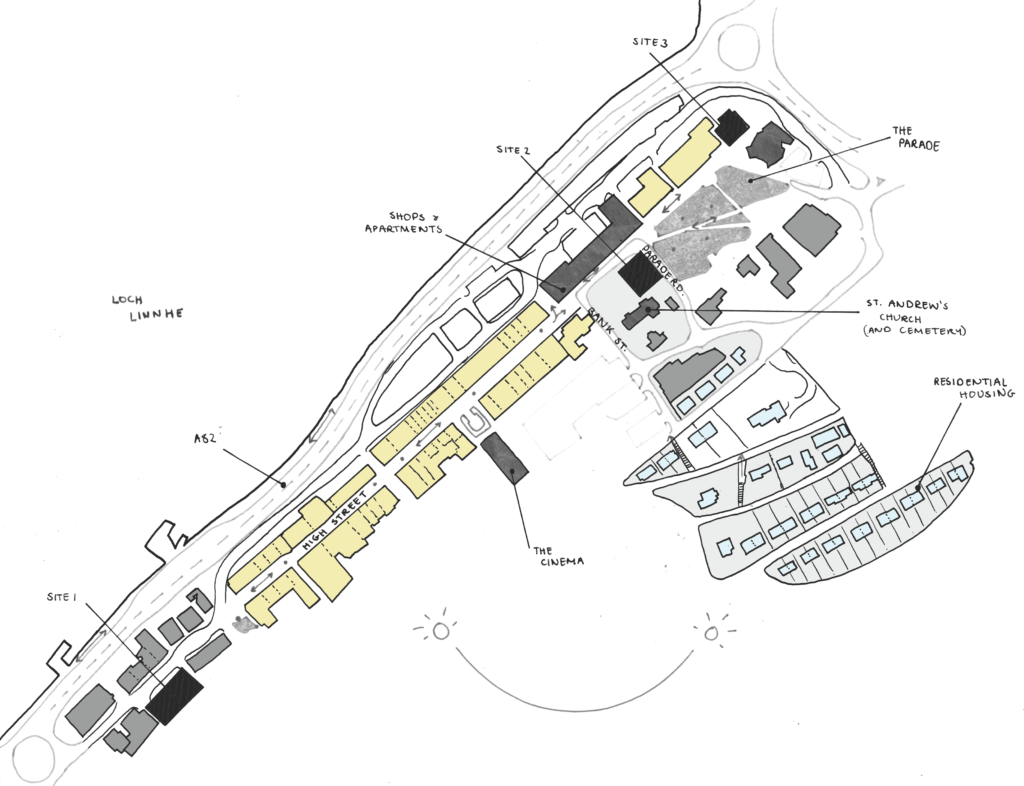
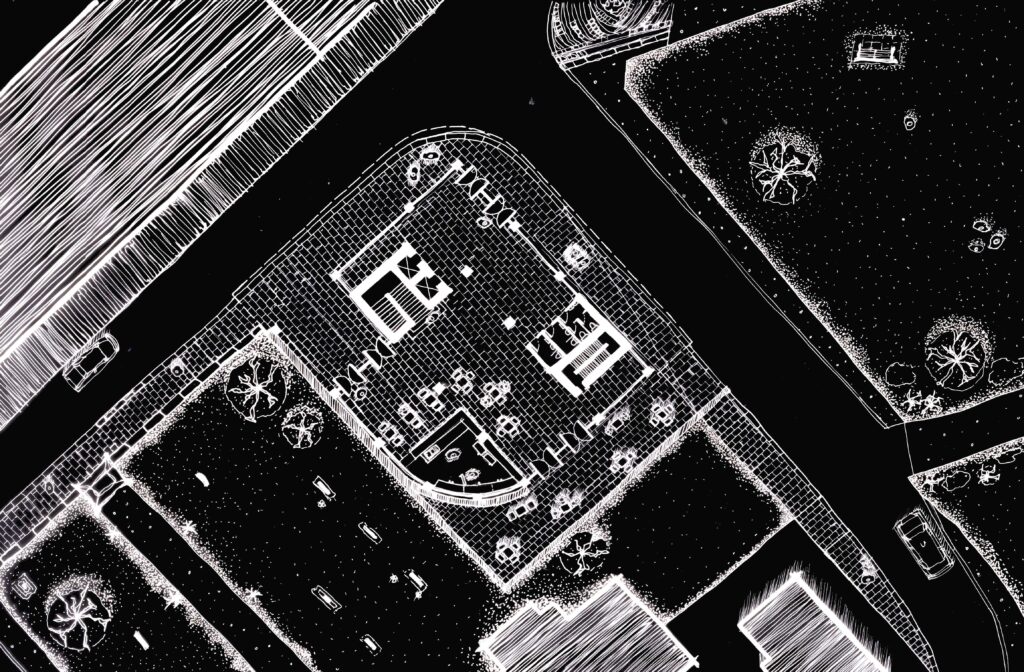
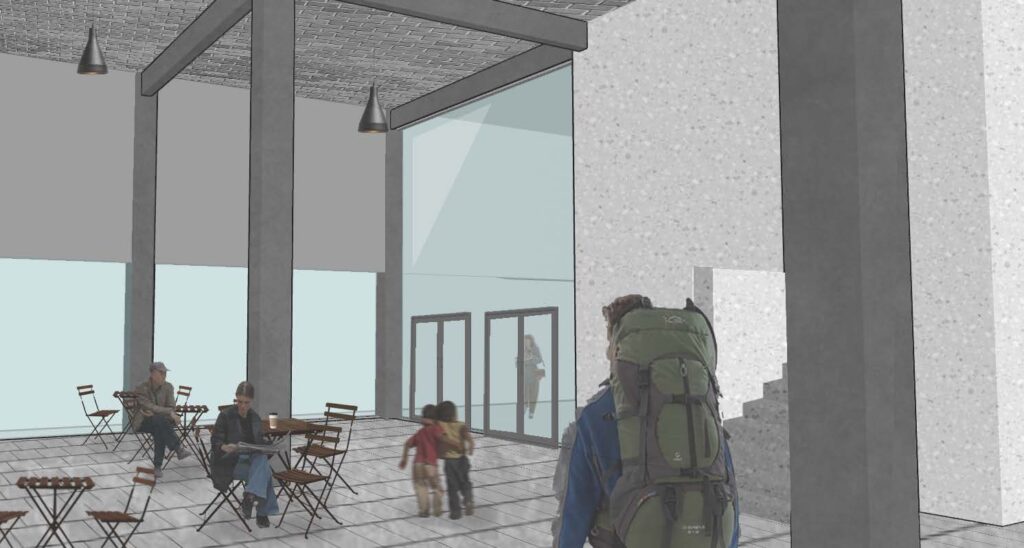
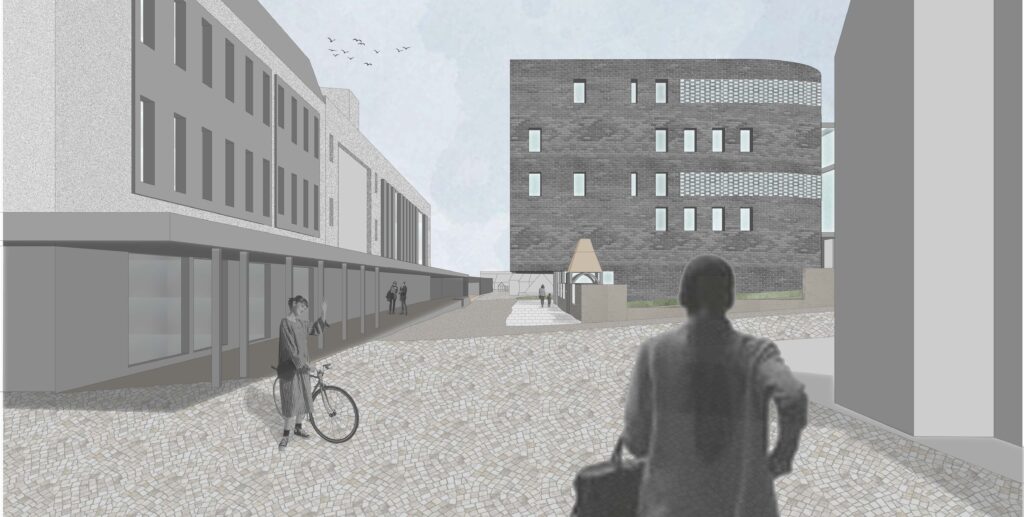
Visiting Fort William to form an understanding of site, I noticed a lack of sheltered outdoor spaces in a wet setting. The site (2) sits between residential streets and the busy High Street, enclosed in an area where locals and visitors are not as interlinked. This led me to imagine the Town Hall as a large civic shelter with an open, unifying threshold for all contexts.
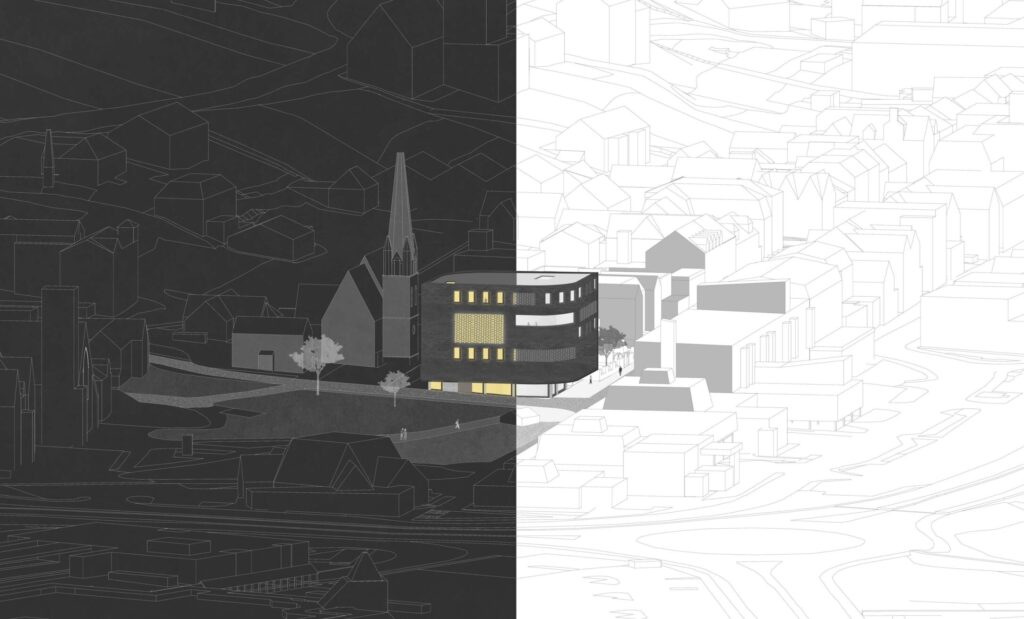
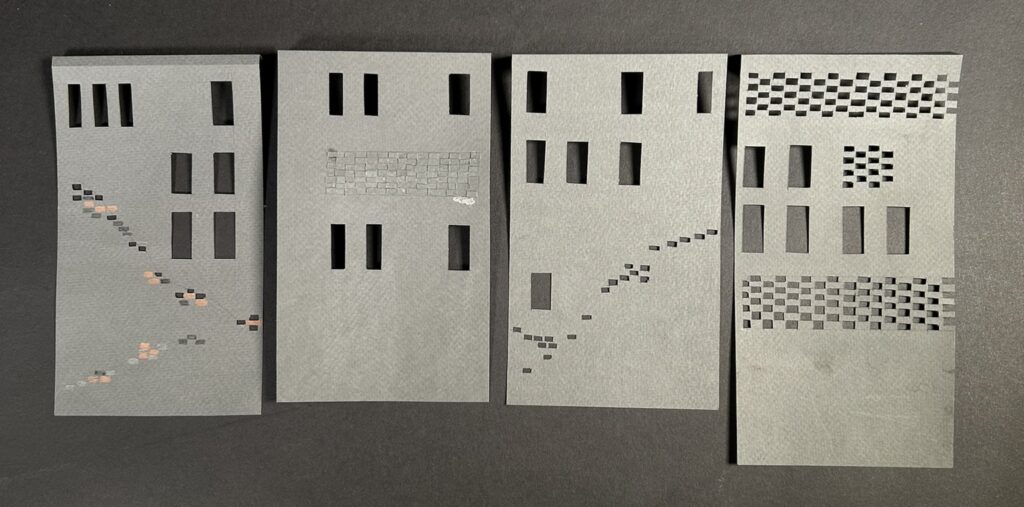
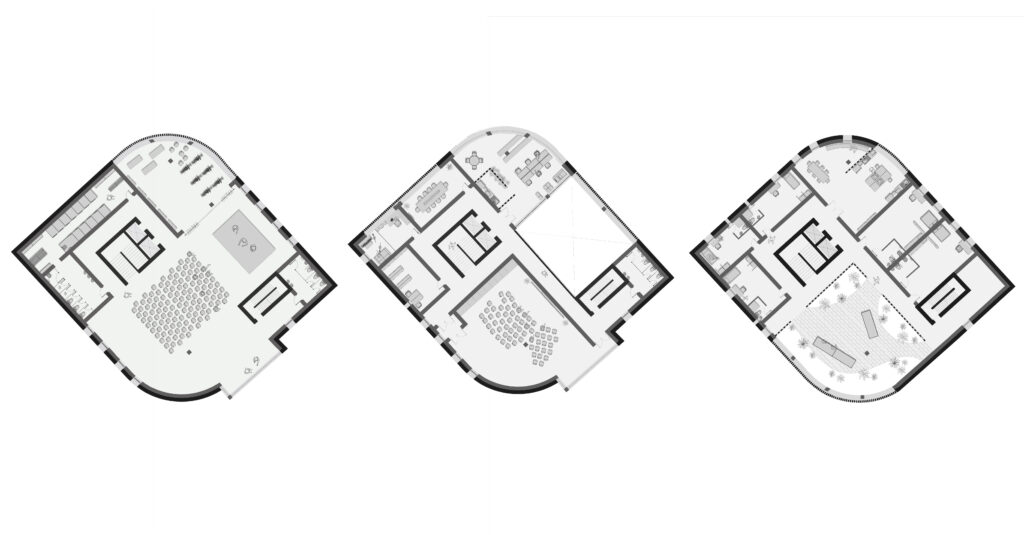
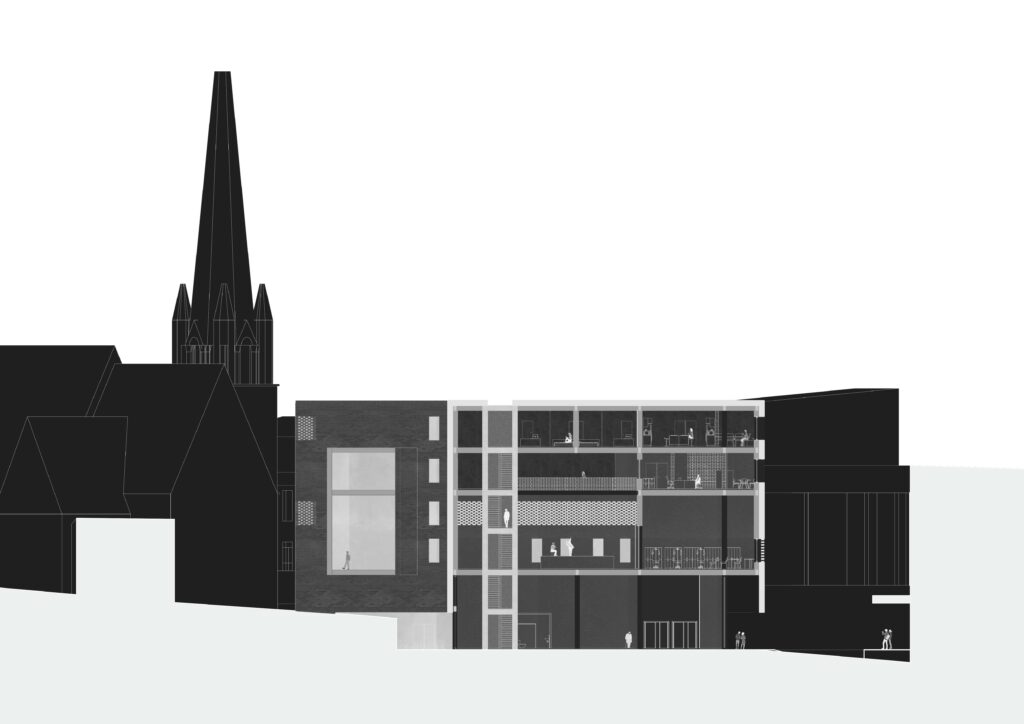
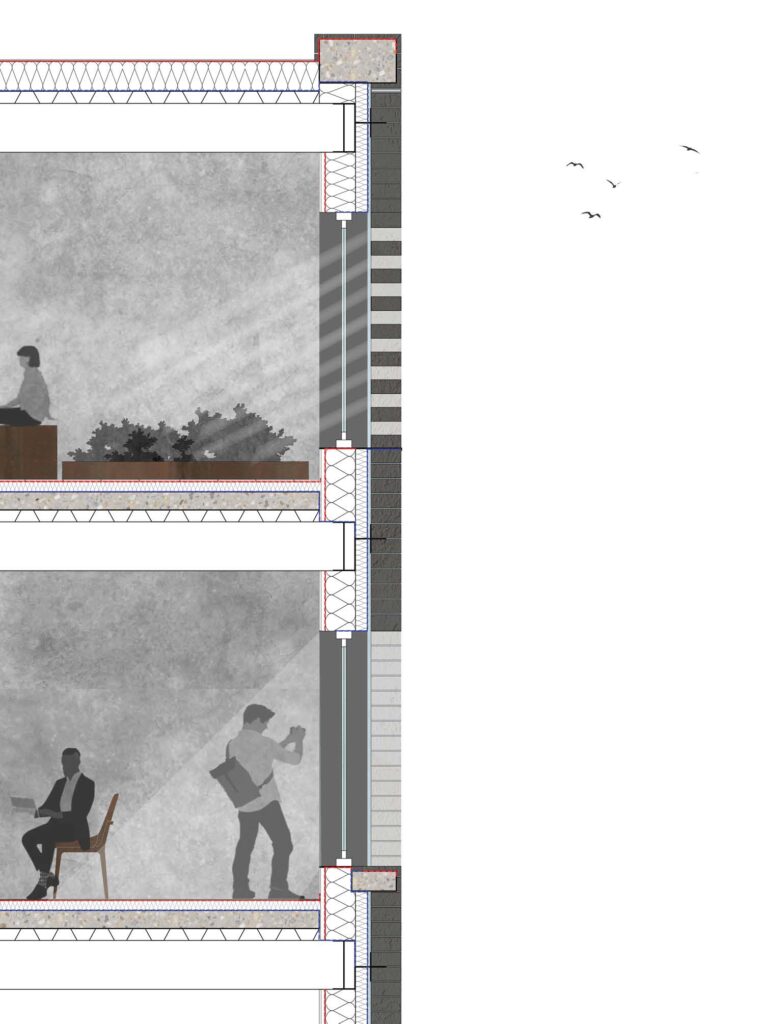
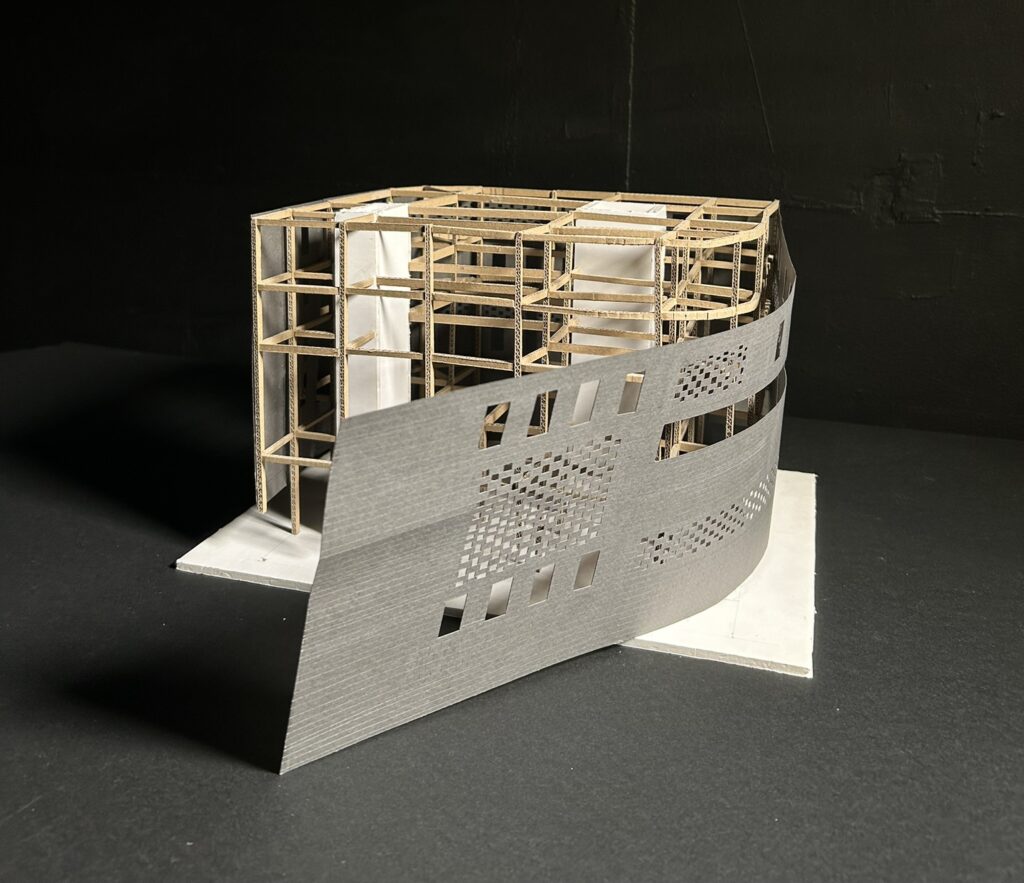
From a distance, the building appears as a bold, monolithic lantern with a simple overhang. As visitors step beneath, it transforms into a dramatic high ceiling that continues the facade within. The exterior brick skin is a custom dark grey tone developed from the surrounding typologies, to create a contextual harmony. Areas of perforated brickwork allow the building to glow at night while providing ventilation, solar shading, and privacy.
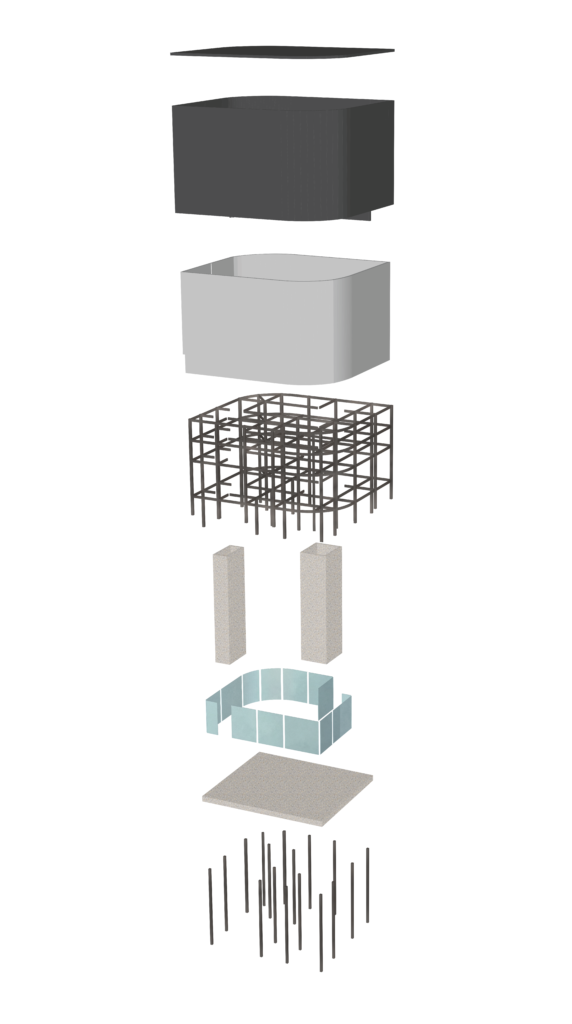
From the north facade, a protruding element frames a focused view toward the neighbouring church and Ben Nevis, creating a direct visual link between The Highland Lantern and Fort William’s cultural and natural landmarks. The ground floor is set back behind continuous glazing, creating the impression that the upper volume floats above the site. The brick skin sits on a recycled steel structural frame, in a way that makes the brick feel like a curtain that hides an industrial interior. A semi-modular structural grid aligns with the repetitive room layout, with all elements built up around the fire escape cores, showing how life safety can be integrated into design.