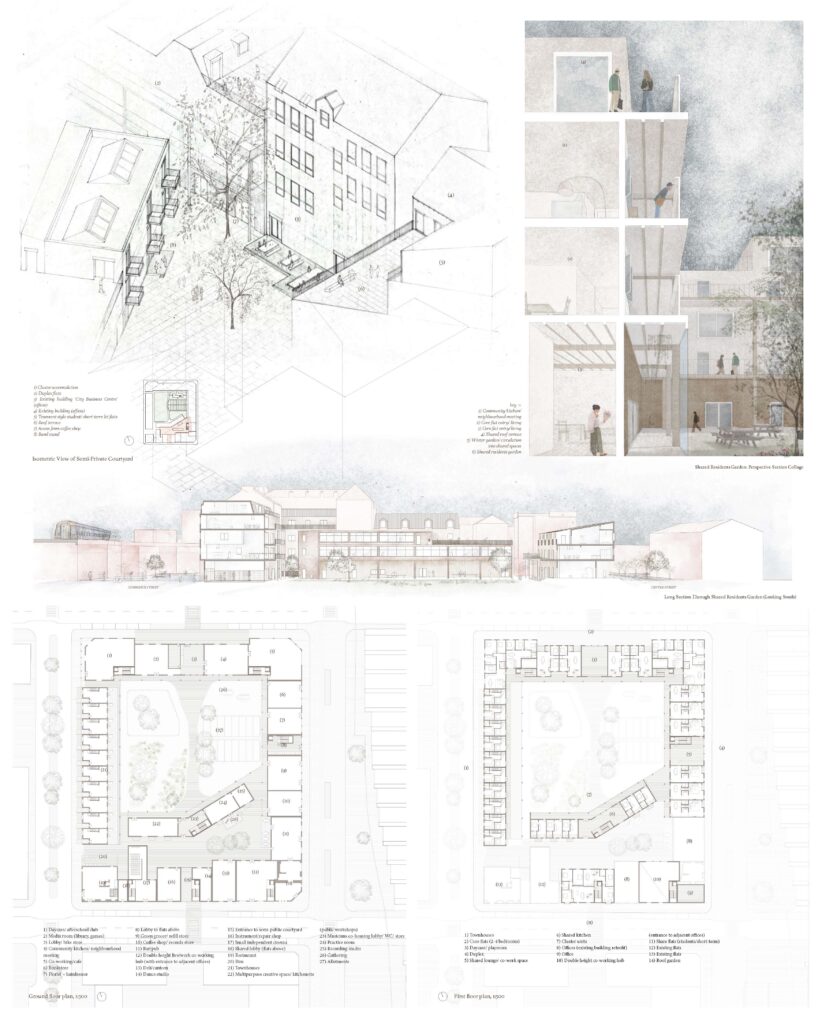
Urban Housing: From Fragments to Formwork
Housing is the essence of architectural practice and how we think about the patterns of everyday life, as it is symbiotic with other city functions and cannot survive without essential organs of amenity and community life. Tradeston, like much of Glasgow, has a feeling of fragmentation – an urban condition resulting from decades of continual making and unmaking. Rejecting the tabula rasa approach which the city has come to know so well, my approach aims to acknowledge what was, supports what is, and anticipate what might return. The project reconsiders the urban housing block as a set of relationships – between street and courtyards, fronts and backs, permanent and temporary residents. Positioned within a three-block study in the heart of Tradeston, access and circulation are treated as opportunities for communication and social exchange. The massing responds to Glasgow’s historic fabric, reinstating fine-grain plot rhythms and positively defining the street. Incorporating aspects of co-living and shared amenity, the proposal supports varied, individual needs whilst advocating for collective stewardship and a sense of community.
The arrangement of flat types around the site brings together a mix of dwelling typologies originally derived from Glasgow housing type studies and later adapted through co-living research. New dwellings range from long-term core flats to short-stay cluster units, supporting a mixed community with varied rhythms of occupation.